
Glossary
Olbers' Paradox
If space has zillions of stars, why isn't the night sky glowing? A 200-year-old space puzzle.
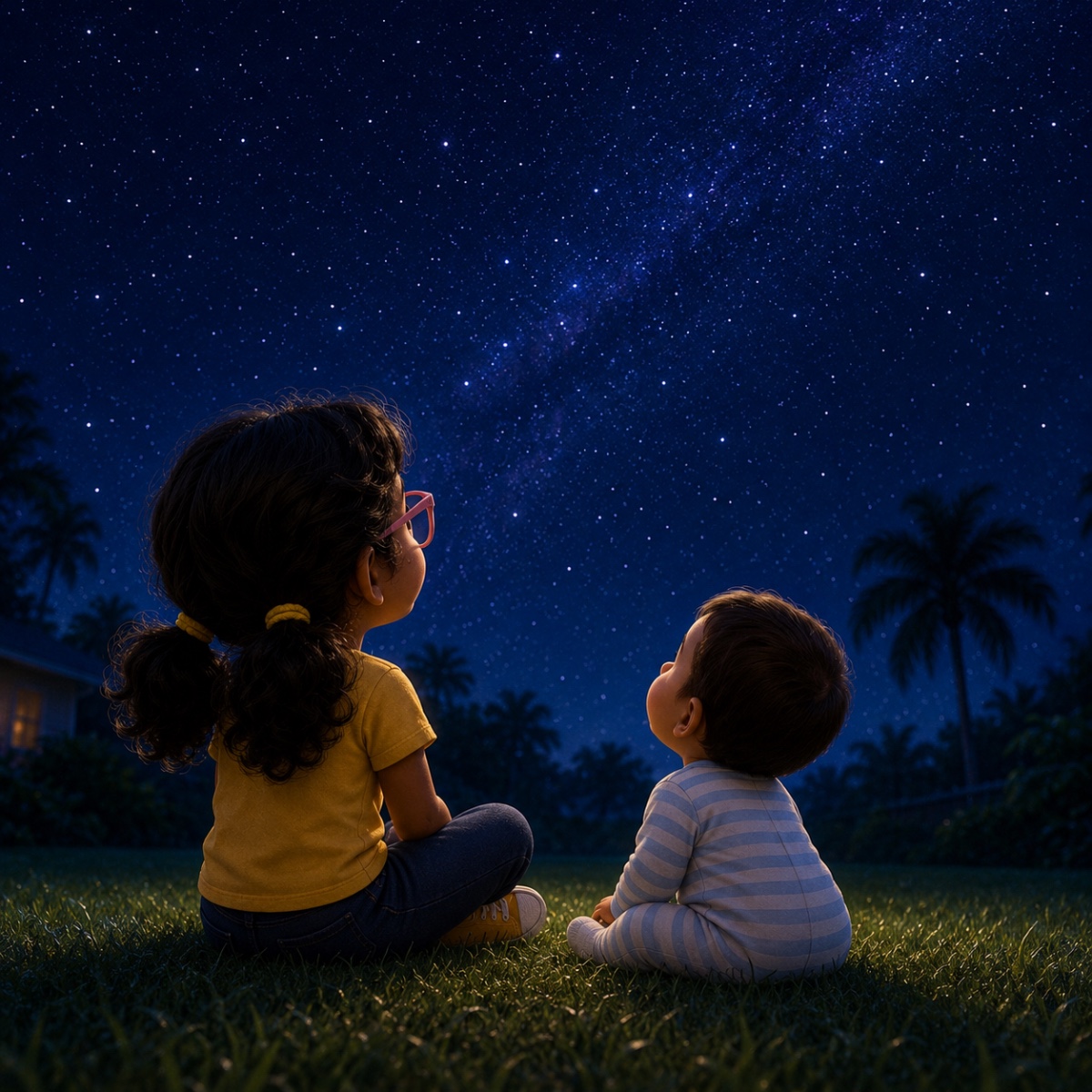
The night sky is dark. Did you ever wonder why?
Stars are everywhere. There are so many of them. So if you stare at any spot in the sky, your eye should land on a star. The whole sky should be bright like a giant glowing lamp.
But it isn't. Most of the sky is black. That's weird, right?
This puzzle has a name. It's called Olbers' Paradox. (A "paradox" is a fancy word for a question that feels like a trick.)
So why IS space dark?
There are two reasons. Both are pretty cool.
Reason one: light is slow
Light is super fast. But the universe is super, super big. Light from really faraway stars hasn't made it to Earth yet. Their light is still on the way! So we don't see those stars at all.
Reason two: space is stretching
The whole universe is getting bigger every second. As space stretches, the light traveling through it stretches too. It stretches into a special kind of light called infrared. Our eyes can't see infrared light. So even when the light does arrive, we miss it.
So the sky IS full of stars?
Yes! Totally. The sky is packed with stars in every direction. We just can't see most of them. Their light is either still on its way, or it stretched into a kind our eyes can't pick up.
A man named Heinrich Olbers wrote this question down in 1823. He never figured out the answer. But now you know it!